 ENG
ENG
 INA
INA
Faculty of Agricultural Technology Lecturers at Udayana University Empower Pangsan Women's Group through Stop Food Waste Education and Used Cooking Oil Upcycling into Aromatherapy Candles
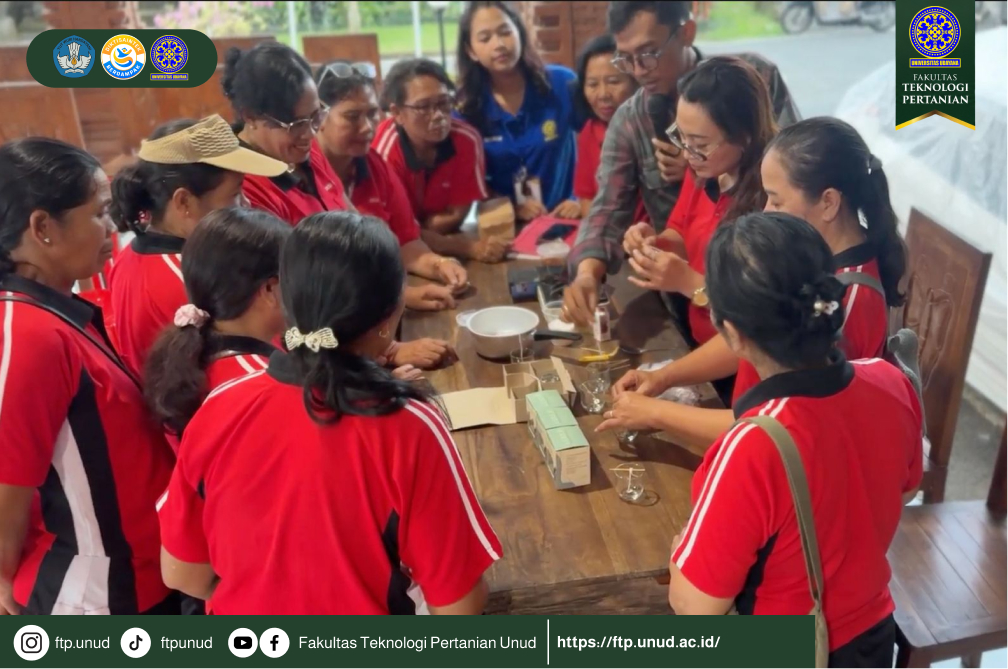
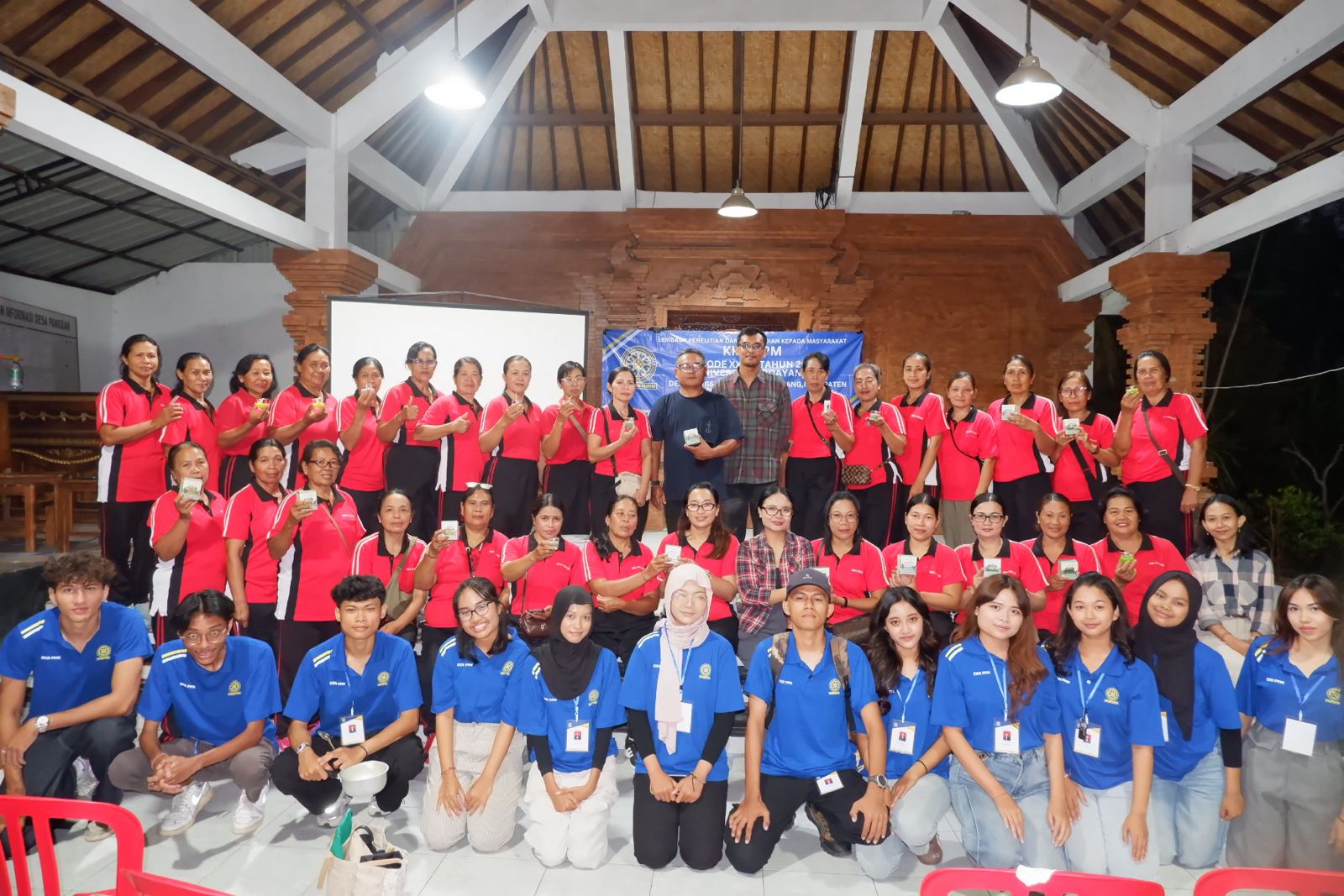
Badung, Bali – Lecturers from the Faculty of Agricultural Technology (FTP), Udayana University, reaffirmed their commitment to community empowerment through the application of science and technology. In collaboration with students participating in the Community Service Program (KKN-PPM) XXXIII of Udayana University, they organized a community outreach program entitled "Household Waste Management through Stop Food Waste Education, Used Cooking Oil Awareness, and a Workshop on Purifying Used Cooking Oil for Aromatherapy Candle Production." The program was successfully held on Monday, August 3, 2026, at the Pangsan Village Office, Petang District, Badung Regency, Bali.
The event was attended by 30 members of the Pangsan Village Family Welfare Empowerment (PKK) organization and was officially opened by I Gusti Ngurah Made Bawa, Secretary of Pangsan Village. In his remarks, he expressed his appreciation to Udayana University, particularly the Faculty of Agricultural Technology, for delivering a community-based educational program that addressed local needs. He emphasized that the initiative not only enhanced public awareness of sustainable household waste management but also introduced practical opportunities to transform waste into value-added products.
The first session was delivered by Ir. I Gede Arie Mahendra Putra, S.TP., M.TP., IPM., ASEAN Eng., a lecturer in the Department of Food Technology, Faculty of Agricultural Technology, Udayana University, who also serves as the Field Supervisor for the KKN-PPM XXXIII Pangsan Village Program. His presentation focused on the Stop Food Waste campaign as an effective strategy to reduce household food waste. He explained that simple behavioral changes—such as better meal planning, proper food storage, and maximizing the utilization of food ingredients—can significantly reduce food waste while improving household spending efficiency and strengthening family food security. The second session was presented by Ni Komang Sri Budihartini, S.TP., M.TP., a lecturer in the Department of Agroindustrial Technology, Faculty of Agricultural Technology, Udayana University. She discussed the health risks associated with the repeated use of used cooking oil and the environmental impacts of improper disposal. Participants were also introduced to a simple purification technique that converts used cooking oil into aromatherapy candles, an environmentally friendly product with promising economic value.
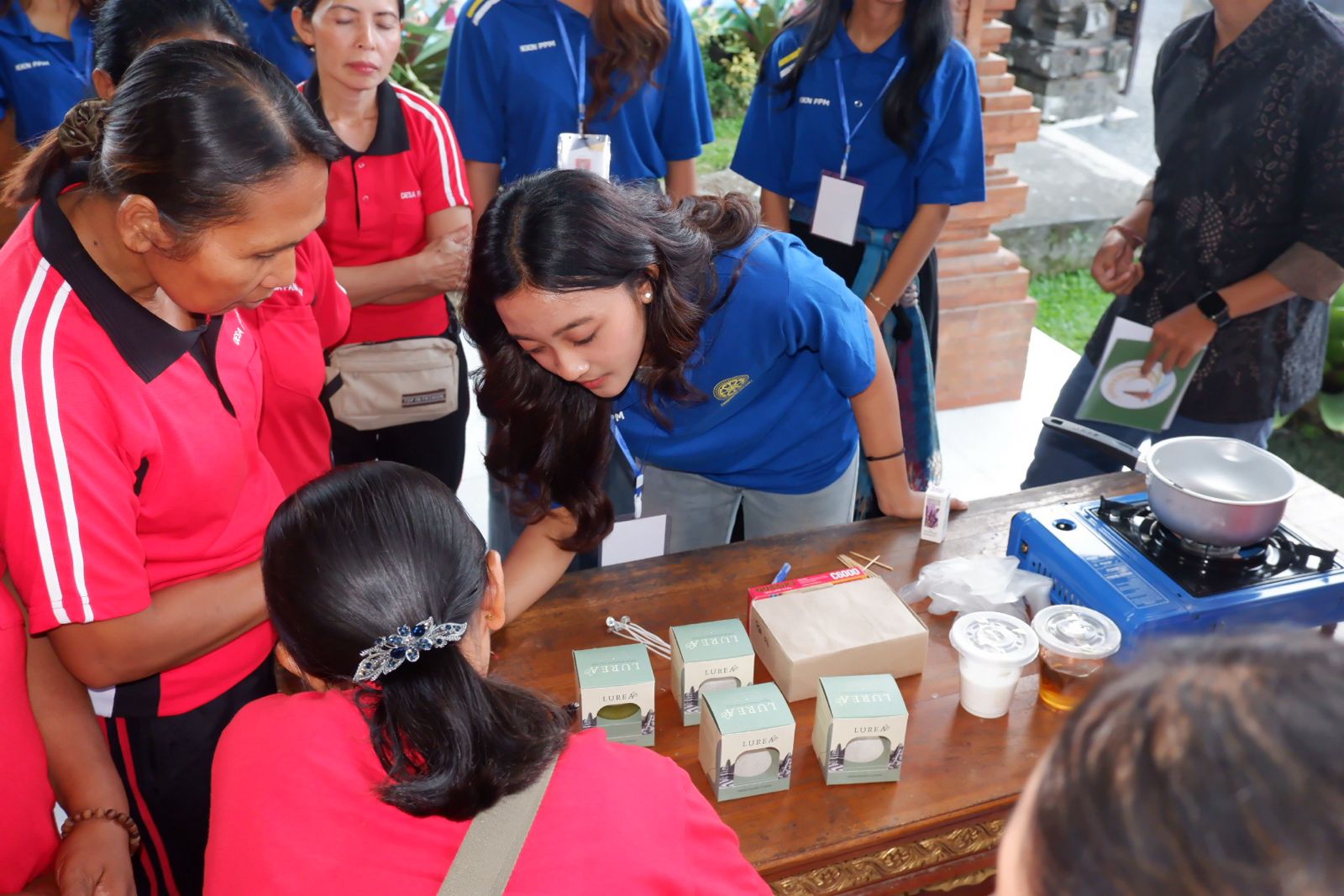
The program extended beyond classroom-style lectures through a hands-on workshop, where participants were guided directly by the lecturers and KKN students. During the practical session, participants learned every stage of aromatherapy candle production, including used cooking oil purification, ingredient preparation, candle molding, and attractive product packaging. In addition, they received training on calculating production costs, determining selling prices, and exploring basic marketing strategies to develop the product into a home-based business. The workshop received an enthusiastic response from the participants. Members of the PKK actively engaged in discussions, asked insightful questions, and enthusiastically participated in every stage of the practical activities. Their high level of participation reflected the community's strong interest in environmentally friendly innovations that not only reduce household waste but also create opportunities for additional family income.
Through this initiative, lecturers from the Faculty of Agricultural Technology, Udayana University, together with KKN-PPM students, successfully integrated environmental education, public health awareness, and entrepreneurship into a comprehensive community empowerment program. This initiative supports the principles of the circular economy by transforming household waste into useful and economically valuable products. It is expected that the knowledge and practical skills gained from this program will continue to be implemented and further developed by the local community. By doing so, Pangsan Village can reduce household waste generation and environmental pollution while fostering a more independent, productive, and environmentally conscious society through innovations initiated by the lecturers of the Faculty of Agricultural Technology, Udayana University, in collaboration with the KKN-PPM XXXIII students of Pangsan Village.
Gallery
UDAYANA UNIVERSITY