 ENG
ENG
 INA
INA
Lecturers of the Faculty of Agricultural Technology, Udayana University Educate Peguyangan Kangin Community on Food Waste Reduction and Used Cooking Oil Utilization
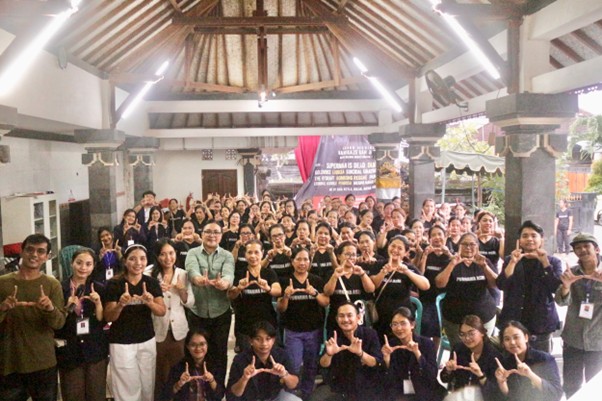
Denpasar – Lecturers from the Faculty of Agricultural Technology, Udayana University, collaborated with students participating in the Community Service Program (Kuliah Kerja Nyata – Pembelajaran Pemberdayaan Masyarakat / KKN-PPM) Period XXXII in 2026 to conduct a community outreach program entitled Stop Food Waste and Household Used Cooking Oil Processing into Water Candles. The activity took place at Banjar Purnama Asri, Peguyangan Kangin Village, North Denpasar District, on Sunday (March 1, 2026). The event was attended by 85 participants, mainly members of the PKK women’s group of Banjar Purnama Asri.
This educational activity aimed to increase public awareness of responsible household food management while encouraging the sustainable utilization of kitchen waste. The program also represents the implementation of the university’s Tri Dharma of Higher Education, particularly in the area of community service.
Before the session began, the KKN student coordinator for Peguyangan Kangin Village, I Gede Eka Nugraha Baskara Putra, presented a brief report on the KKN program activities conducted in the village. He explained that the outreach program was designed to provide practical knowledge to the community on reducing food waste and utilizing household waste more effectively.
The event was officially opened by the Head of the PKK Banjar Purnama Asri, Ni Nyoman Sariani, who expressed her appreciation for the initiative taken by the lecturers and students of Udayana University in organizing an educational program for the local community. According to her, the topic was highly relevant for housewives who play a key role in managing food consumption within families.
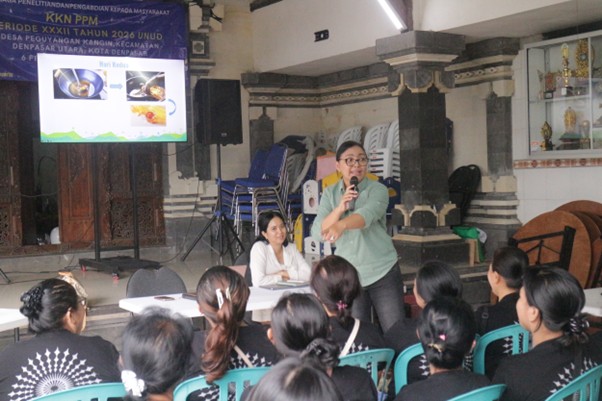
During the activity, two lecturers from the Faculty of Agricultural Technology, Udayana University, served as the main speakers. The first session on the Stop Food Waste Movement was delivered by Luh Dian Rna Fajarini, S.TP., M.Sc. She explained that food waste often occurs at the household level due to improper shopping planning, inadequate food storage practices, and the habit of discarding leftover food.
“Good household food management can begin with simple steps such as planning grocery shopping according to actual needs, storing food ingredients properly, and utilizing leftovers that are still safe for consumption. When practiced consistently, these habits can significantly reduce food waste,” she explained.
The second session focused on the utilization of used cooking oil and was delivered by Dewa Ayu Anom Yuarini, S.TP., M.Agb., IPU., ASEAN Eng. In her presentation, she highlighted that improper disposal of used cooking oil can cause environmental pollution, particularly to soil and drainage systems.
“Used cooking oil, which is often considered waste, can actually be processed into useful products, such as water candles. This not only helps reduce environmental pollution but also opens opportunities for transforming household waste into simple products with potential economic value,” she stated.
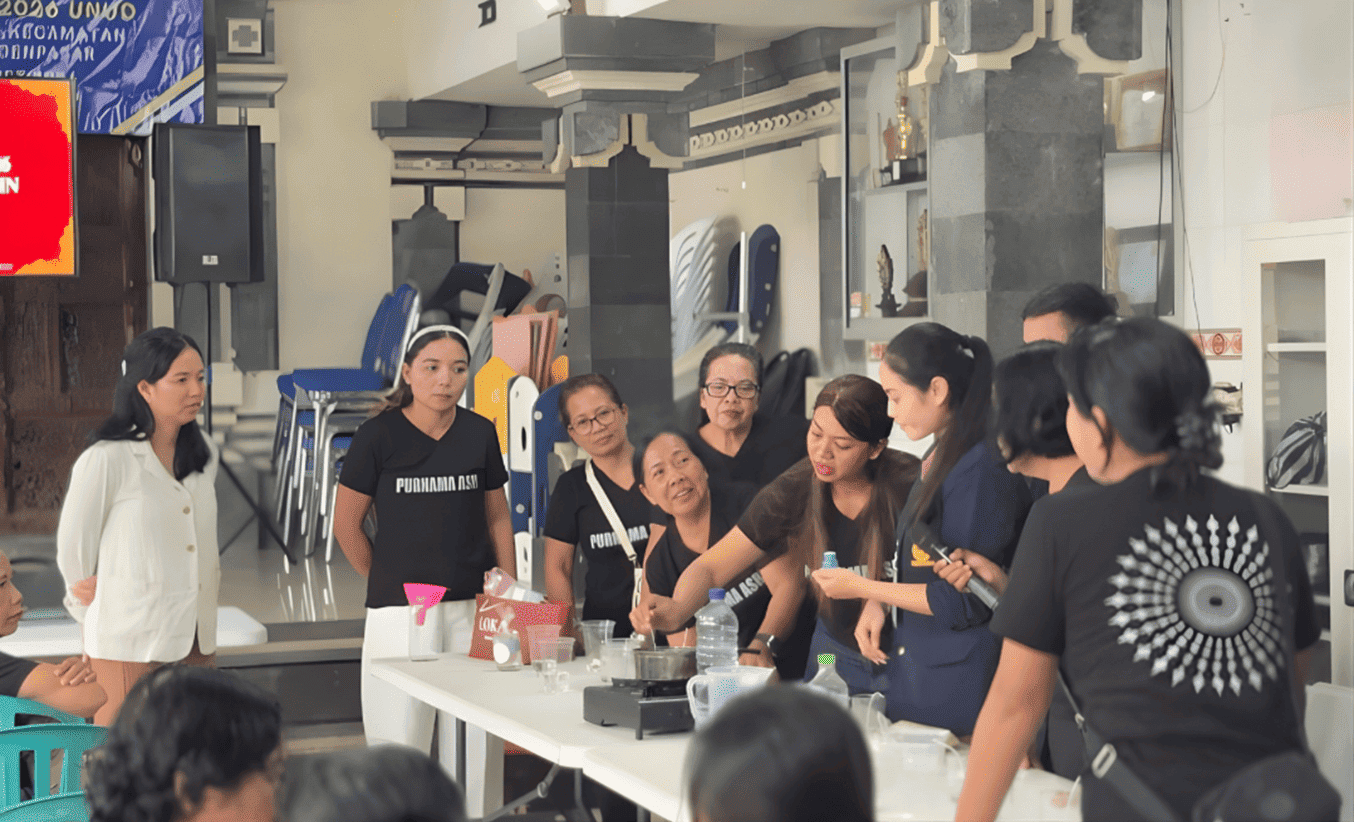
In addition to the presentations, the activity also included a hands-on workshop on making water candles from used cooking oil. During the practical session, participants were guided by KKN students to try the process directly. The participants showed great enthusiasm, actively engaging in the practice session and discussions about managing food leftovers and used cooking oil in their households.
The program was also supervised by the KKN field supervisor, Ir. I Gede Arie Mahendra Putra, S.TP., M.TP., IPM., ASEAN Eng., who emphasized the important role of universities in providing education and practical solutions for communities.
“Community service activities like this demonstrate how universities can contribute directly to society by promoting more responsible consumption patterns and sustainable household waste management,” he stated.
Through this initiative, lecturers and students of the Faculty of Agricultural Technology, Udayana University hope that the community will adopt more responsible habits in managing food and creatively utilize household waste in an environmentally friendly manner. The program is also aligned with the theme of Udayana University’s KKN Program in 2026, which focuses on sustainable waste management through community empowerment.
Gallery
UDAYANA UNIVERSITY